Trained crews and full safety protocols for entering, cleaning, and pumping tanks, interceptors, pits, and vaults that most contractors can't safely touch.
Tanks, interceptors, wet wells, pits, and vaults are classified as confined spaces — areas with limited entry, poor ventilation, and the potential for hazardous atmospheres. Entering them without proper training, monitoring, and equipment is dangerous and, in most cases, illegal. These jobs demand a crew that follows strict safety procedures every single time.
JN Grease Service performs confined-space entry, cleaning, and pumping with trained personnel, atmospheric monitoring, and the right protective and rescue equipment. We get the job done safely and completely, then document the work — so a difficult, high-risk task is handled the right way.
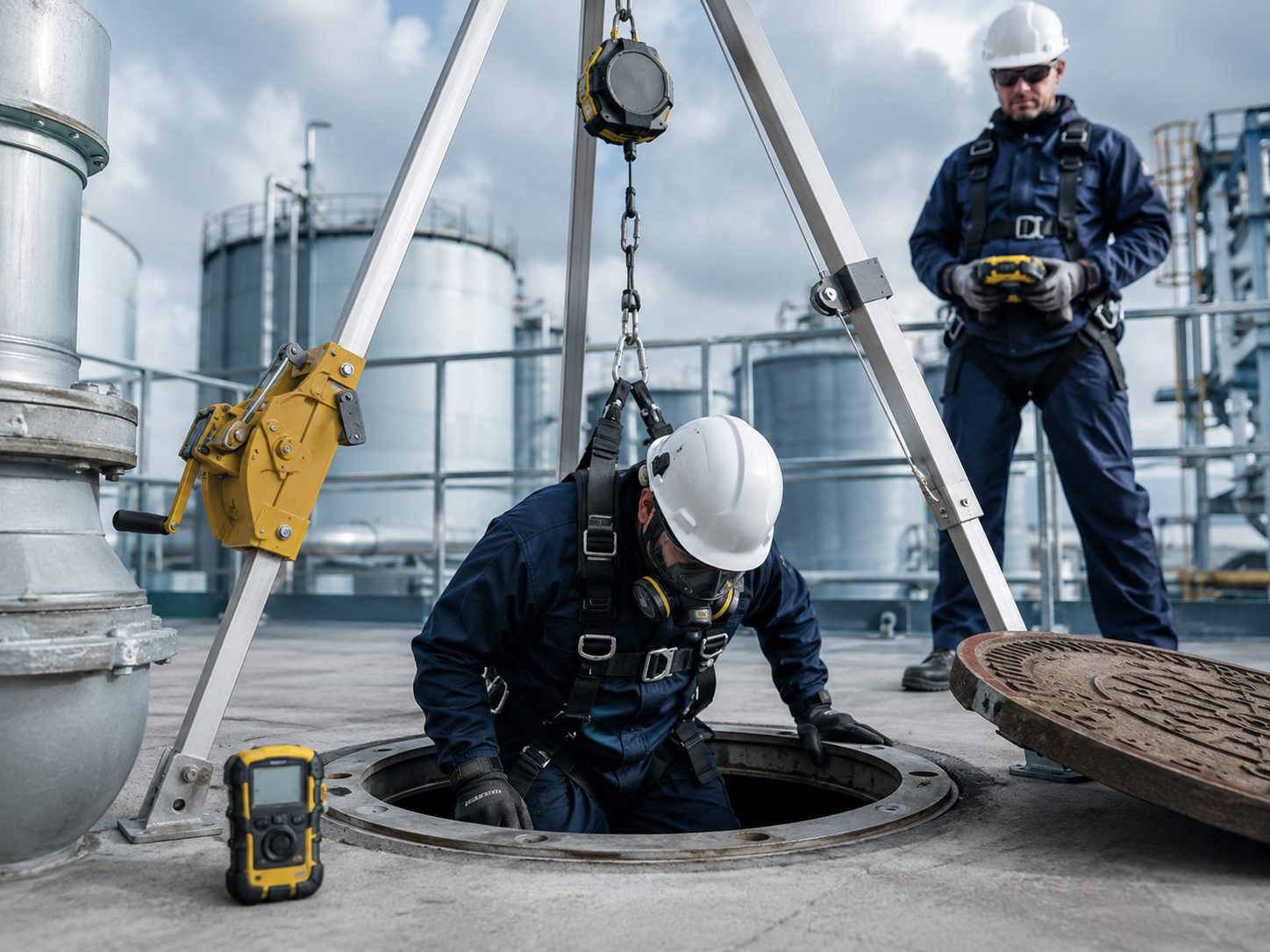
Toxic gases, low oxygen, and engulfment risks make untrained entry genuinely life-threatening.
Confined-space entry is governed by safety rules requiring training, monitoring, and permits.
Safe entry needs trained crews, atmospheric testing, and rescue-ready equipment — not just a ladder.
Entry, cleaning, and pumping of above- and below-ground tanks.
Large in-ground grease interceptors requiring internal access.
Lift stations, sumps, and pits that need evacuation and cleaning.
Below-grade structures with limited, hazardous access.
Heavy buildup that has to be removed from inside the structure.
Urgent situations requiring safe, rapid confined-space response.
Safety drives everything we do in a confined space — from the first air test to the final document. Nothing is skipped.

We evaluate hazards and complete the required entry permitting.
Atmospheric testing, ventilation, and rescue equipment are put in place.
Trained crews enter to clean, pump, and remove buildup safely.
The job and disposal are fully documented for your records.
Confined-space work is where shortcuts get people hurt. We never take them. Every entry follows full protocol so the job is completed safely, completely, and in line with regulations.
Confined-space entry without training and equipment is dangerous and often illegal. Let a trained crew handle it the right way.
Confined-space work is priced around the space, the hazards, and the scope. Here's what we factor into your quote.
The structure and how much has to be cleaned or pumped inside it.
Atmospheric and other hazards determine the safety setup required.
The number of trained personnel and the gear the entry demands.
How much sludge, residue, or liquid needs to be removed.
Difficult or below-grade access adds time and equipment.
Recurring or planned work is more efficient than emergency calls.
Based in Menifee, we serve Riverside, San Bernardino, Los Angeles, and Orange counties — and the surrounding communities.
Tanks, interceptors, wet wells, pits, vaults, and manholes — structures with limited entry and exit, poor ventilation, and the potential for hazardous atmospheres.
Confined-space entry without training, monitoring, and equipment is dangerous and usually illegal. Hazards like toxic gas and low oxygen are often undetectable without testing.
Hazard assessment, entry permitting, atmospheric testing and continuous monitoring, ventilation, PPE, and trained attendants with rescue-ready equipment.
Cleaning, pumping, and removal of sludge, residue, and liquids from tanks, interceptors, pits, and similar structures.
Yes. Permits, testing, work performed, and disposal are all documented for your compliance records.
Yes — we provide rapid, safe confined-space response when an urgent situation can't wait. Call (951) 343-1212.