Complete pumping, deep cleaning, and ongoing maintenance for grease traps and interceptors of every size — so your kitchen never backs up, never smells, and is always ready for inspection.
Running a business is demanding enough without having to worry about grease trap maintenance. Our professional grease interceptor services are designed to give you confidence that everything is operating safely and efficiently.
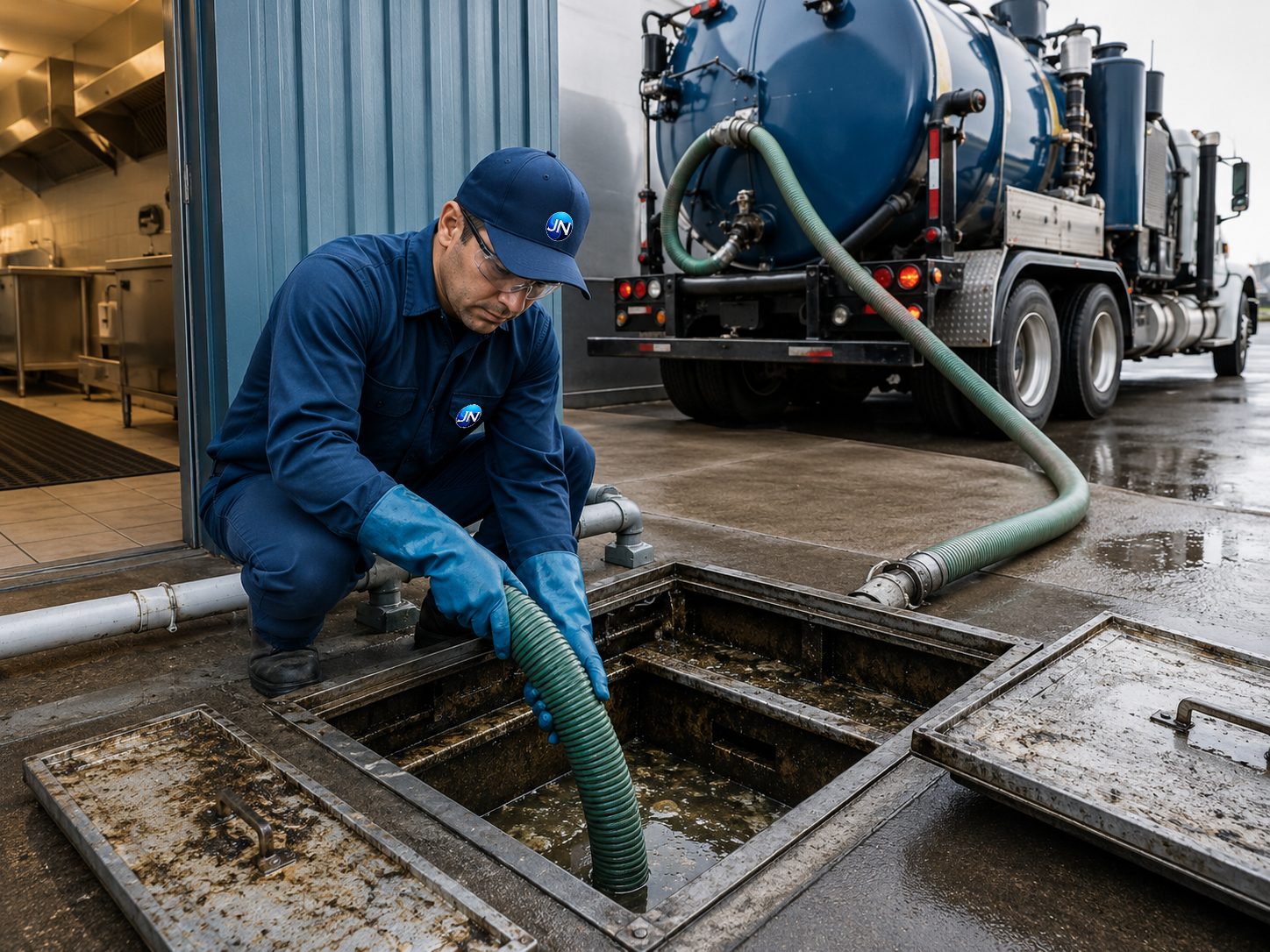
Our trained technicians start each service by fully pumping out all liquids, grease, and solid waste from the interceptor. Every interior surface is then thoroughly cleaned to eliminate accumulated residue and prevent future blockages. Once cleaning is complete, the entire system is carefully examined to confirm it is functioning correctly — and any issues found are reported right away, often repaired during the same visit.

Grease interceptor pumping is the process of removing accumulated grease, oils, wastewater, and solid debris from a grease interceptor to keep it functioning properly. Over time, fats, oils, and grease naturally build up inside the system, reducing capacity and increasing the risk of blockages, foul odors, and sewer backups. Regular pumping prevents these issues and helps maintain smooth kitchen operations. Without proper maintenance, grease interceptors can overflow or fail, leading to costly repairs, health code violations, and potential business shutdowns. Routine pumping also allows technicians to inspect the interceptor for early signs of damage or malfunction. By keeping the system clean and efficient, businesses can extend the lifespan of their interceptor, reduce emergency service calls, and stay compliant with local regulations. Grease interceptor pumping is not just maintenance — it is an essential part of responsible facility management.
A professional grease interceptor service involves more than simply pumping out waste. Technicians begin by completely removing all grease, liquids, and solid materials from the interceptor. Once emptied, all interior surfaces are thoroughly cleaned to eliminate hardened buildup that can restrict flow or damage components. After cleaning, a detailed inspection is performed to ensure the interceptor is operating correctly. Technicians check baffles, inlet and outlet pipes, and overall structural condition. If any mechanical or functional problems are found, they are reported immediately. In many cases, minor repairs can be completed during the same visit, helping prevent larger failures in the future. This comprehensive approach ensures optimal performance, minimizes downtime, and helps businesses avoid unexpected issues that could interrupt daily operations.
Routine grease interceptor pumping and repair offers long-term benefits for commercial kitchens and food service facilities. Regular maintenance helps prevent plumbing backups, unpleasant odors, and costly emergency repairs. It also ensures compliance with health and environmental regulations, reducing the risk of fines or penalties. Consistent service allows technicians to identify potential issues early, before they become major problems. Proper documentation and service records support inspections and demonstrate responsible maintenance practices. Additionally, well-maintained grease interceptors operate more efficiently, protecting downstream plumbing systems and extending equipment lifespan. By investing in routine grease interceptor care, businesses gain peace of mind, improved operational efficiency, and a cleaner, safer working environment for staff and customers alike.
They do the same job — separating grease and solids from wastewater — but they differ in size, location, and how they're serviced. We handle both, and we'll help you confirm which one your facility actually has.
Indoor · Smaller Capacity
Compact units installed indoors, usually under a sink or near the dish area. They handle the flow from one or a few fixtures and fill up quickly, so they need more frequent service.
In-Ground · Large Capacity
Large in-ground tanks installed outside the building that handle the entire kitchen's wastewater. They hold far more, so they're serviced less often — but require specialized vacuum equipment.
FOG cools and hardens layer by layer while solids settle below. The unit looks fine until capacity is already gone.
Once the trap is full, wastewater has nowhere to go — backups and overflows hit during your busiest shift, not your slowest.
Emergency cleanups, health-code fines, lost service hours, and damaged plumbing cost far more than routine maintenance.
Sinks and floor drains backing up or draining sluggishly.
A rotten, sulfur-like smell rising from drains or the unit.
Grease or wastewater rising up through drains or onto floors.
A thick floating cap or solids you can see near the top.
Drain flies and pests drawn to accumulated grease.
More than 1–3 months since your last documented service.
No upsells, no shortcuts. Every appointment is a complete service that leaves your unit at full working capacity with paperwork in hand.

We confirm unit size and condition and measure grease and solids levels.
Commercial vacuum equipment removes all grease, solids, and water.
Walls, baffles, and lids are deep-cleaned to restore full capacity.
Waste is hauled to a licensed facility with a manifest for your records.
Local agencies require commercial kitchens to maintain their grease systems and keep proof of regular service. Fall behind and you risk fines, citations, or a forced shutdown. We keep you covered on every front.
Every visit is documented and every manifest is filed. When the inspector shows up, you'll have everything you need on hand — no scrambling, no surprises, no downtime.
There's no one-size-fits-all price for grease service — it depends on your equipment and how you cook. Here's what we look at to give you an honest, straightforward quote.
Larger interceptors take more time and haul more waste than small indoor traps.
The busier your kitchen, the faster grease builds — and the more often you'll need service.
Fryer-heavy and high-fat menus produce far more FOG than lighter prep.
Hard-to-reach or below-grade units take extra time and equipment to service safely.
A neglected, overfull unit is a tougher job than one kept on a steady schedule.
Multi-site operations get coordinated scheduling and consolidated reporting.
Based in Menifee, we serve Riverside, San Bernardino, Los Angeles, and Orange counties — and the surrounding communities.
The pumping frequency depends on interceptor size, kitchen volume, and local regulations. Most commercial facilities require service every one to three months to prevent grease buildup, backups, and compliance issues.
Service includes complete removal of grease, liquids, and solids, thorough interior cleaning, and a full inspection to ensure proper operation and identify potential issues early.
Yes, many mechanical or functional issues can be repaired on the same service visit, reducing downtime and helping your business continue operating without interruption.
Yes, a service receipt and waste manifest are provided after each visit, and service records are maintained for at least two years for compliance and inspection purposes.
Yes. We offer 24/7 emergency response for backups, overflows, and urgent situations — call (951) 343-1212 any time.